

Table of Contents
- Signs of Heat Damaged Hair You Shouldn't Ignore
- The Big Chop vs. Transitioning: Which Path Is Right for You?
- How to Fix Heat Damaged Hair at Home: Your Recovery Routine
- Protein Treatments for Hair: When and How to Use Them
- Best Deep Conditioning Masks for Damaged Hair
- How to Prevent Heat Damage Before It Starts
- Conclusion: Rebuilding Healthy Hair Takes Time, Not Perfection
Last Updated: August 7, 2026
Signs of Heat Damaged Hair You Shouldn't Ignore
Heat damaged hair is a structural problem that worsens if ignored. The outer cuticle layer is made of overlapping scales that protect the inner hair shaft. Repeated thermal styling lifts and chips those scales until the hair can no longer retain moisture, maintain elasticity, or resist breakage.
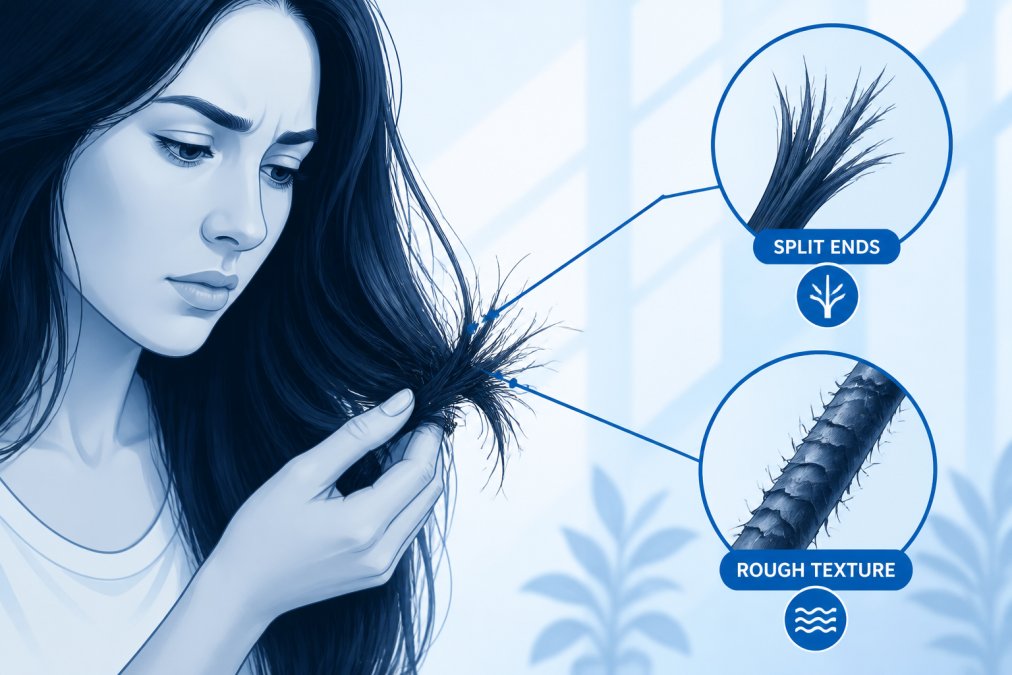
The most common signs include:
- Persistent frizz and flyaways that don't respond to smoothing products
- Split ends that travel up the shaft, not just at the tips
- Unusual dryness and brittleness, strands snap instead of stretching
- Loss of curl pattern in naturally wavy or curly hair
- A rough, straw-like texture even after conditioning
- Increased porosity, hair absorbs water quickly but can't hold it
The elasticity test is a practical first check: gently stretch a wet strand. Healthy hair stretches slightly and springs back. Heat damaged hair either snaps immediately or stretches without returning to shape, signaling that the internal protein structure has been compromised.
Heat Damage vs. Chemical Damage: What's the Difference?
Both types of damage share symptoms, dryness, brittleness, and breakage, but the underlying cause differs. Heat damage breaks down hydrogen bonds within the hair shaft through high temperatures, disrupting keratin structure and lifting the cuticle. Chemical damage from bleach, relaxers, or color treatments alters disulfide bonds that give hair its shape and strength, often causing more permanent changes.
Heat damaged hair typically responds well to moisture restoration and protein treatments because the damage concentrates in the cuticle layer. Chemically damaged hair may require longer recovery, and some texture changes can be irreversible. If you've experienced both, your recovery routine needs to address moisture and protein balance.
The Big Chop vs. Transitioning: Which Path Is Right for You?
The Big Chop means cutting off the majority of damaged hair at once. It's the fastest route to healthy ends, eliminates the two-texture problem where new growth meets damaged length, and provides an immediate visual reset. The trade-off is losing length.
Transitioning means growing out healthy hair while gradually trimming away damage over months. This preserves length but requires more patience and consistent care to manage the boundary between damaged and healthy hair.
| Factor | Big Chop | Transitioning |
|---|---|---|
| Severity of damage | Severe, most of the length | Mild to moderate, mostly ends |
| Timeline preference | Faster results | Gradual, length-preserving |
| Maintenance commitment | Lower ongoing effort | Higher, regular trims required |
| Hair type | Works for all types | Especially common for curly/coily hair |
| Emotional readiness | Requires willingness to cut | More gradual adjustment |
Neither option is wrong. The Big Chop is most efficient for severe damage. Transitioning works well when damage is limited to the ends and you're committed to consistent care. Recovery products and techniques are largely the same; the timeline differs.
How to Fix Heat Damaged Hair at Home: Your Recovery Routine
Fixing heat damaged hair at home requires a structured approach. The recovery process works in layers: remove the worst damage, restore moisture and protein, then protect what you've rebuilt.
Step 1: Trim Split Ends First
Start here. No product can repair a split end; it will only continue splitting further up the shaft. Trimming before treatment removes the most damaged material and gives every subsequent step a better foundation.
For minor trimming at home, use clean hair shears and cut just above the visible split. For significant damage, a professional trim provides a clean baseline.
Step 2: Restore Moisture with Deep Conditioning
Heat damage strips the hair shaft of moisture and disrupts the cuticle's ability to retain it. Deep conditioning treatments penetrate the hair shaft to restore moisture retention and smooth the cuticle layer.
Apply a deep conditioning mask to clean, damp hair, focusing on mid-lengths and ends. Cover with a shower cap and leave on for 20-30 minutes. Heat from a hooded dryer or warm towel helps open the cuticle and allows conditioning agents to penetrate more effectively. Deep condition once a week during active recovery, then shift to every two weeks for maintenance.
Step 3: Detangle Gently to Minimize Breakage
Forcing a brush through tangled, damaged hair causes mechanical breakage on top of existing heat damage. Always detangle on damp, conditioned hair using a wide-tooth comb or your fingers, starting from the ends and working upward. Apply a leave-in conditioner or detangling spray first, and work in small sections without yanking through knots.
Step 4: Support Scalp Health During Recovery
The scalp is where hair growth originates. A compromised scalp environment slows the growth of new, healthy hair. Wash with a gentle, sulfate-free shampoo to avoid stripping natural oils. Massage the scalp during washing to stimulate circulation. If experiencing dryness or flaking, apply a lightweight scalp oil between washes.
According to American Academy of Dermatology guidance on hair and scalp health, maintaining a healthy scalp environment is foundational to supporting hair growth.
Protein Treatments for Hair: When and How to Use Them
Protein treatments address the breakdown of keratin and amino acid structure inside the hair shaft. Protein fills gaps along the hair shaft, temporarily rebuilding the structure that gives hair elasticity and resistance to breakage.
Protein and moisture need to stay in balance. Too much protein without adequate moisture makes hair stiff and prone to snapping. Too little protein leaves hair limp and unable to hold its shape.
Signs you need a protein treatment:
- Hair feels mushy or overly stretchy when wet
- Hair lacks elasticity and doesn't spring back after stretching
- Excessive shedding and breakage despite regular conditioning
Signs you need more moisture instead:
- Hair feels stiff, rough, or brittle
- Hair snaps without stretching
- Deep conditioning temporarily helps but results don't last
A light protein treatment once every 3-4 weeks is a reasonable starting point for most heat damaged hair. Look for products containing hydrolyzed keratin, amino acids, or peptides. Keratherapy's formulas use KERABOND Technology, which combines amino acids and organic botanicals to deliver keratin-replenishing benefits without harsh chemicals.
According to the International Journal of Trichology on keratin structure and hair damage, the amino acid composition of the hair shaft plays a direct role in its mechanical strength and resilience.
Best Deep Conditioning Masks for Damaged Hair
The best deep conditioning masks for damaged hair contain humectants to draw moisture into the hair shaft, emollients to smooth the cuticle, and ideally protein or amino acids to support structural repair.
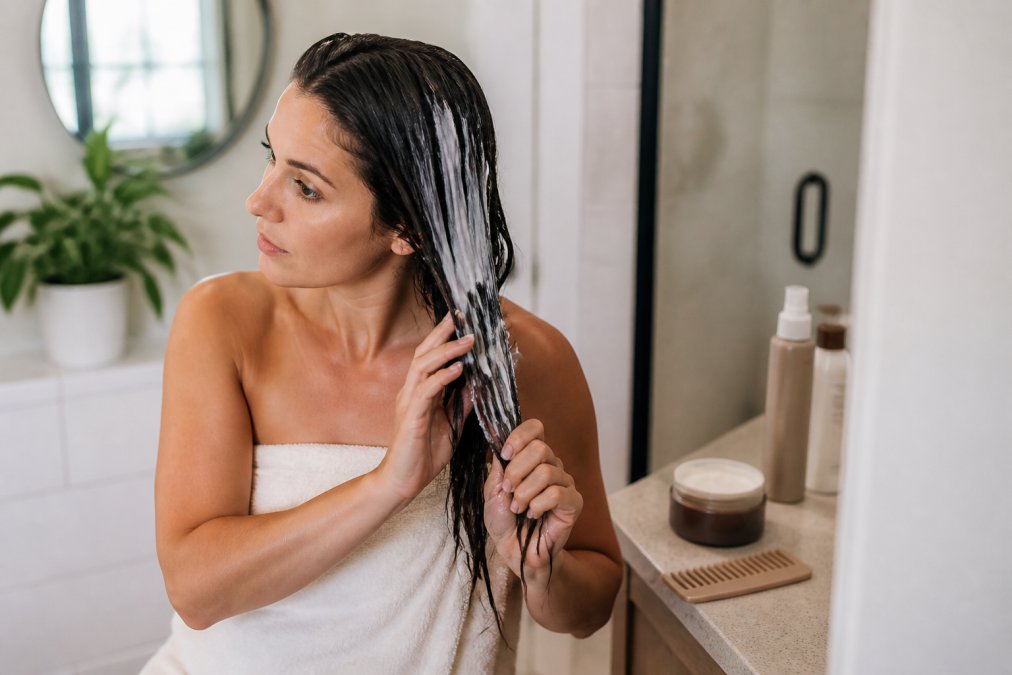
When evaluating any deep conditioning mask, look for these ingredients:
- Hydrolyzed keratin or amino acids, penetrate the hair shaft to rebuild protein bonds
- Shea butter or argan oil, smooth the cuticle and reduce frizz
- Glycerin or aloe vera, draw moisture into the hair
- Panthenol (vitamin B5), improves moisture retention and adds elasticity
Avoid masks that rely heavily on silicones as the primary conditioning agent. Silicones coat the hair shaft and create the appearance of smoothness without addressing underlying porosity or moisture deficit.
Budget-Friendly DIY Alternatives That Actually Work
Several kitchen staples have genuine conditioning properties that support recovery between product treatments.
Avocado and olive oil mask: Mash half a ripe avocado with one tablespoon of olive oil. Apply to damp hair, cover with a shower cap, and leave for 30 minutes. Avocado contains fatty acids and vitamins that penetrate the hair shaft; olive oil adds emollient smoothing.
Egg and honey mask: One egg yolk mixed with one tablespoon of honey provides protein and lecithin; honey is a natural humectant. Apply to damp hair for 20 minutes, then rinse with cool water.
Plain Greek yogurt: Applied directly to damp hair for 20 minutes, Greek yogurt delivers lactic acid and protein, improving hair texture and softness.
These alternatives work best as supplements to a consistent product routine. According to the National Center for Biotechnology Information overview of natural hair care ingredients, several plant-derived oils and proteins have documented effects on hair fiber hydration and cuticle condition.
How to Prevent Heat Damage Before It Starts
Prevention is the most efficient recovery strategy. The biggest gap is not knowing heat protectant exists, but underestimating how much application method and tool temperature matter.
The non-negotiables for preventing heat damage:
- Always apply heat protectant to damp hair before any thermal styling tool. Apply to towel-dried hair, not dripping wet.
- Set your tools to the right temperature. Fine or chemically treated hair: 300-350°F. Normal hair: 350-400°F. Thick or coarse hair: up to 450°F.
- Keep tools moving. One slow, smooth pass is better than multiple fast ones.
- Limit thermal styling frequency. Aim for no more than 2-3 times per week.
- Deep condition proactively. Hair that is consistently hydrated and protein-balanced withstands heat better.
The American Academy of Dermatology's recommendations on heat styling safety consistently point to temperature control and pre-styling protection as the two most effective preventive measures.
Hair porosity also plays a role. High-porosity hair absorbs heat more aggressively and needs extra protective layers before styling. If your hair dries very quickly after washing, that's a sign of high porosity, and your heat protectant routine needs to be more thorough.
Conclusion: Rebuilding Healthy Hair Takes Time, Not Perfection
Recovering from heat damage isn't a single product fix or a one-week project. It's a consistent routine: trim what's beyond repair, restore moisture and protein in balance, protect the scalp, and stop adding more damage while new growth comes in.
Keratherapy's professional-quality formulas use KERABOND Technology to replenish keratin and amino acids directly in the hair shaft. The sulfate-free, paraben-free formulas work across all hair types without buildup or harsh chemistry. Take the Keratherapy quiz to find the right products for your hair type and get started on a recovery routine that actually holds.
Frequently Asked Questions
Is it possible to repair heat damaged hair?
You can significantly improve the condition of heat damaged hair, though fully reversing structural damage to the hair shaft requires new growth. Treatments that replenish keratin, amino acids, and moisture restore elasticity, reduce frizz, and repair the cuticle layer, making hair look and feel healthier. Consistent deep conditioning, protein treatments, and trimming split ends over several weeks produces real, visible results. The key is committing to a routine rather than expecting a single product to undo months of thermal styling damage overnight.
How long does hair take to recover from heat damage?
Recovery time depends on how severe the damage is. Mildly damaged hair with dryness and frizz can look noticeably better within two to four weeks of consistent conditioning. Severely damaged hair with significant breakage or lost elasticity takes longer, often three to six months of regular care, including trimming, deep conditioning, and bond-building treatments. Because hair grows roughly half an inch per month, truly damaged sections may need to be grown out and trimmed away gradually for full restoration.
Does cutting off heat damaged hair have to be the only solution?
Cutting is not the only option, but some trimming is usually necessary to remove split ends that cannot be repaired. Split ends travel up the hair shaft if left untrimmed, causing more breakage over time. For heavily damaged hair, a significant cut speeds up recovery. For mild to moderate damage, regular small trims combined with moisturizing masks, protein treatments, and heat protectant use can restore hair health without losing much length. The choice between a big chop and gradual transitioning depends on your damage level and personal preference.
How can I make heat damaged hair look better immediately?
A hydrating hair mask or deep conditioning treatment applied to damp hair for 20 to 30 minutes delivers quick, visible improvement by temporarily sealing the cuticle and adding moisture. Using a frizz-control serum or leave-in conditioner on damp hair before air drying also smooths the hair surface fast. Avoid heat styling while recovering, and use a wide-tooth comb on wet hair to prevent additional breakage. These steps won't permanently repair the hair shaft, but they make a real difference in texture and appearance right away.
This article was written using GrandRanker